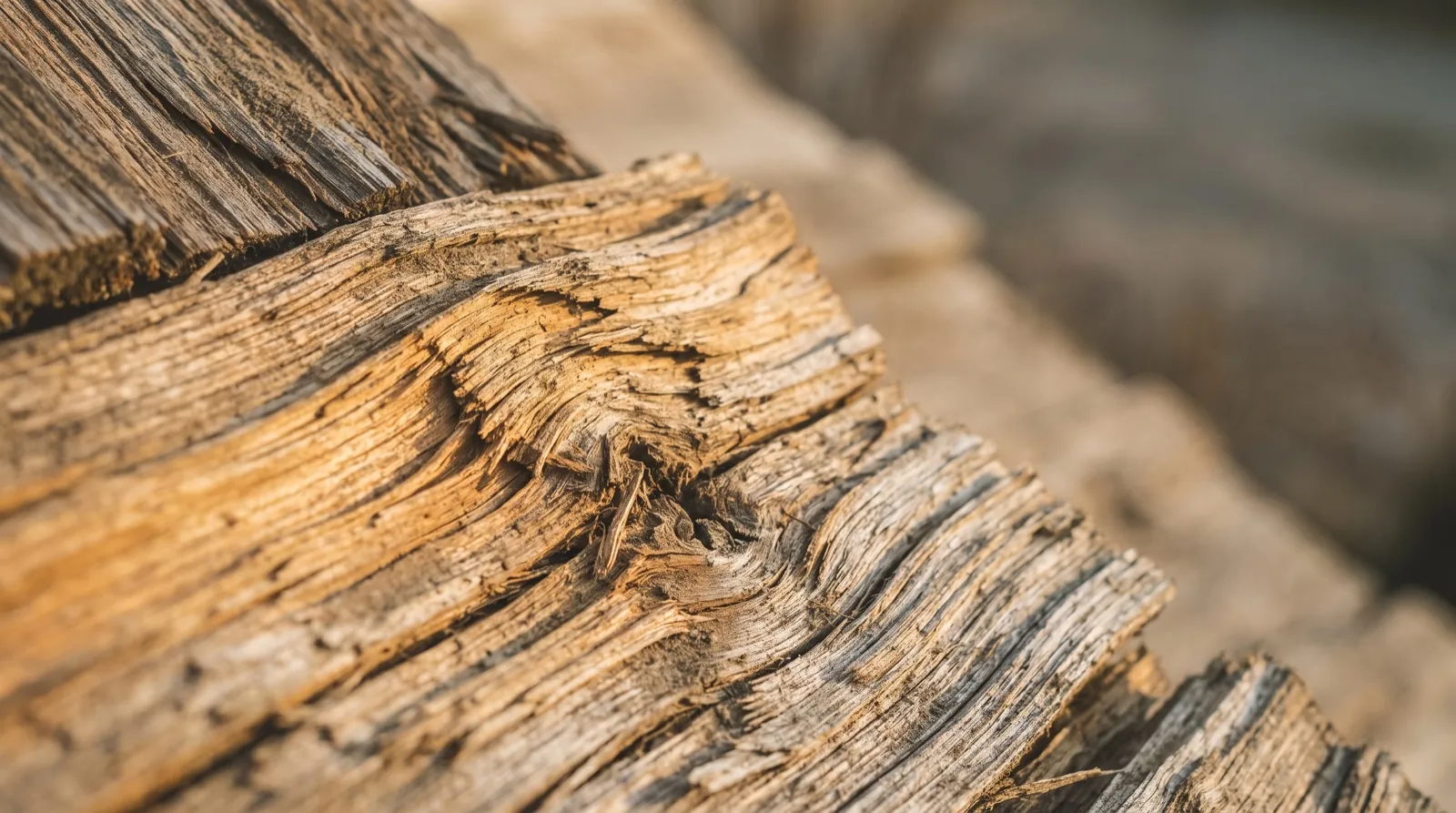
Close-up of the grain of cleft sweet chestnut
Home · The material

Hand-cleft sweet chestnut

Why this wood, and why cleft. Everything behind a roof covering that lasts a hundred years.

The principle

“Cleft wood sheds water. Sawn wood drinks it.

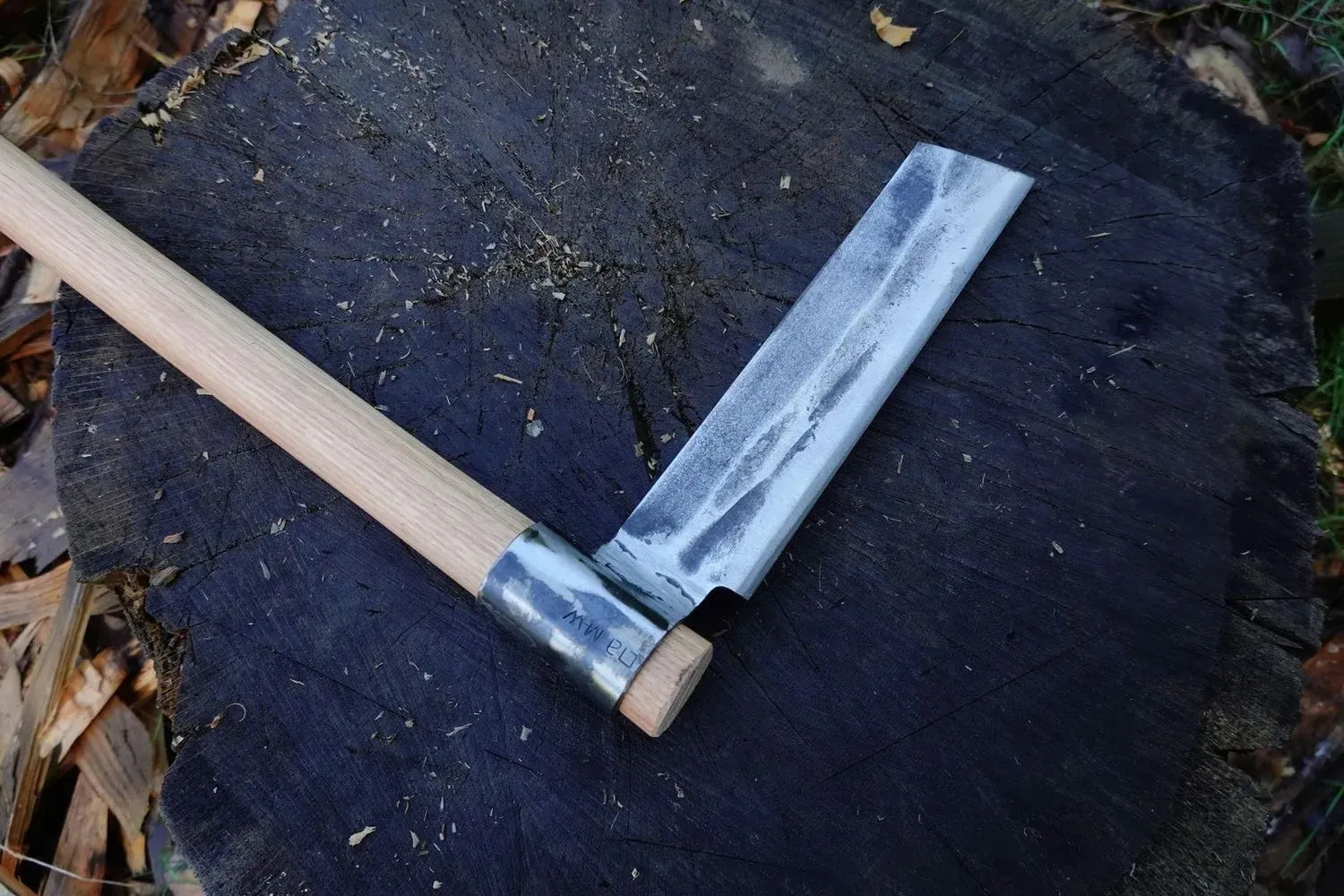
The froe, the tool used to cleave sweet chestnut
The craft

Cleft, never sawn.

Cleaving follows the natural grain of the wood and leaves the fibres intact, so water runs off. Sawing severs them, and water soaks in. That is the whole difference between a roof that ages and a roof that rots.

Each 33 cm bolt is quarter-cleft, then stripped of its sapwood. Only the durable heartwood goes onto a roof.

What the material offers

Six reasons to roof in sweet chestnut.

Watertight

The fibres stay intact: water runs along the grain and never penetrates the wood.

Stable

Growth rings sit perpendicular to the faces: no swelling, no distortion over time.

Renewable

Sweet chestnut regrows in 20 years. Managed coppice, no quarrying, no extraction.

Unbreakable

Does not break in transport, in frost or in storms. No replacements to plan for.

Rot-proof

Rich in tannins, it stands up to rain, frost, sun and insects, with no treatment at all.

Regulating

Wood conducts neither heat nor cold: a natural thermal regulator on any roof.

Durability

A roof that outlasts generations.

Rich in tannins, sweet chestnut is rated durability class 2 under EN 350: it resists fungi and insects without the slightest treatment. Properly laid and ventilated, it lasts beyond a hundred years.
100 yrs +
The lifespan of a roof
2
Durability class · EN 350
0
Chemical treatment
~538 kg/m³
Density at 12 % moisture
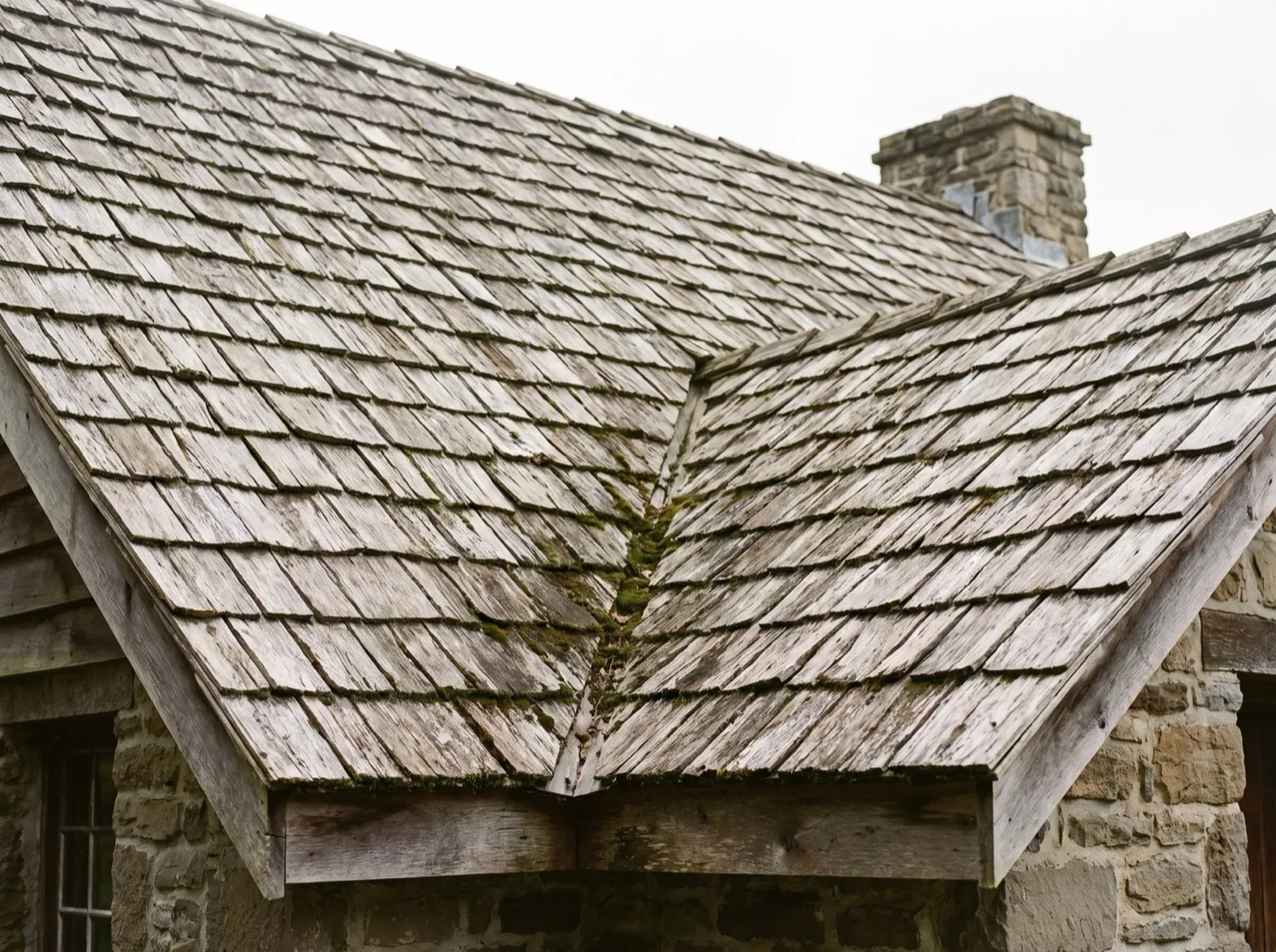
Sweet chestnut roof weathered by time
The wood through time

From honey to silver, a beauty that comes with age.

Freshly laid, sweet chestnut shows warm tones, from honey to golden brown. Under sun and rain it turns, within months, to a deep silver grey, losing none of its qualities.

That patina is not a flaw: it is the mark of time on a noble material, the same grey you admire on hundred-year-old roofs.

Good to know

Sweet chestnut, without the myths.

Why does sweet chestnut need no chemical treatment?
Sweet chestnut is naturally rich in tannins, which protect it from fungi and insects. It is rated durability class 2 under EN 350, an excellent natural resistance, with no added products whatsoever.
What is the difference between cleft and sawn wood?
Cleaving follows the natural grain and respects the fibres: the surface sheds water. Sawing cuts through the fibres and opens pathways for moisture. A cleft shingle therefore lasts considerably longer.
How long does a sweet chestnut roof last?
Properly laid and ventilated, it routinely lasts more than a century. Countless church spires and farmhouses bear witness to it. The wood silvers on the surface over time, without losing its structural qualities.
Do your shingles comply with standards?
Yes: the French codes DTU 40.29 (roofing) and DTU 41.2 (cladding), and Eurocode 5 (structural). Sweet chestnut stores biogenic carbon, recognised by the French RE2020 regulation.

Compliance & commitments

DTU 40.29 roofing DTU 41.2 cladding Eurocode 5 structural RE2020 biogenic carbon EN 350 durability class 2

Recognised as a heritage material by the Architectes des Bâtiments de France, the French heritage authority. Technical documentation available for your files.

Want to see the material up close?

Receive a sample of hand-cleft chestnut, or the full technical data sheet for your project file.
Instant online quote Enquiry form